Passports and travel advice
Check the entry rules for your passport before you book, and read your government's travel advice for Morocco, such as the UK Foreign Office's travel advice (opens in a new tab) or the US State Department's Morocco page (opens in a new tab). Both are updated regularly.
Clothes for the medinas
Morocco is relaxed about what visitors wear, but loose clothes that cover the shoulders and knees are more comfortable in the heat and draw less attention in the medinas and villages. Think linen trousers, long skirts or dresses, and light shirts. Shorts and vest tops are fine at the beach and by a pool.
If you plan to visit a mosque that is open to visitors, such as the Hassan II Mosque in Casablanca, women will want a scarf for their hair and everyone needs covered arms and legs.
Clothes for the desert
The Sahara swings from hot days to cold nights, so the secret is layers:
- For the day: a light long-sleeved shirt, loose trousers, a hat or cap and sunglasses.
- For the evening: a fleece or warm jacket, all year round. From December to February nights at camp get close to freezing, so add a hat and warm socks.
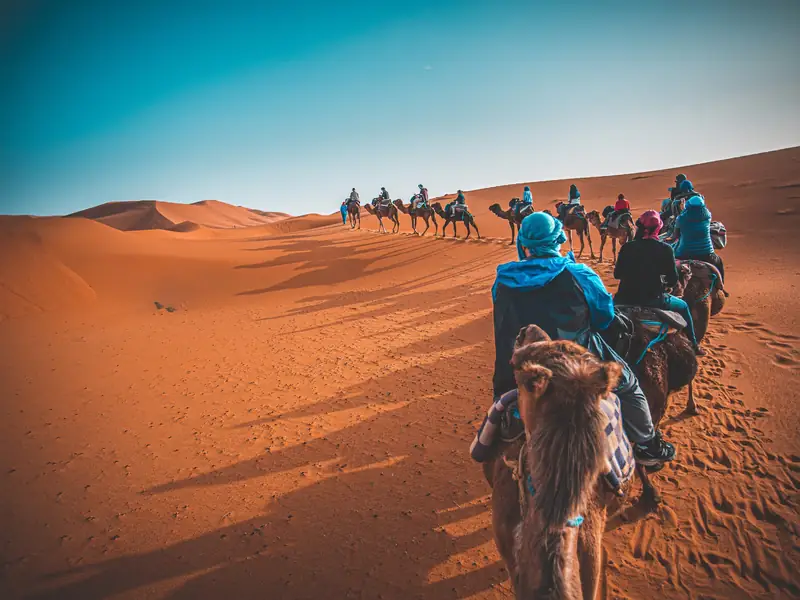
- A scarf: the most useful thing you can bring. It keeps the sun off your neck and the sand out of your face on the camel ride.
- Shoes: the sand is soft, so walking barefoot on the dunes is lovely. Bring sandals for camp and closed shoes for the rest of the trip.
For the mountains
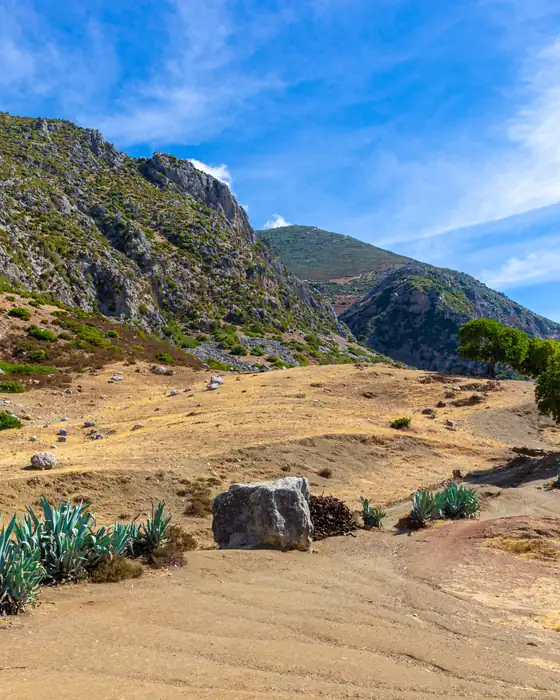
If your trip includes walking in the Atlas or the Rif, like our Rif Mountains hiking trip, bring proper walking shoes with grip, a light waterproof and a warm layer even in summer. Hiking boots are worth it for the full days on foot.
 5 days · from TangierRif Mountains HikingSee the route
Money
The Moroccan dirham is a closed currency, so you usually can't buy it before you travel. The UK government's entry requirements page for Morocco (opens in a new tab) explains the rules for bringing money in and out. Cash machines are easy to find in cities and towns, and exchange offices at airports and in the medinas give fair rates. Cards work in many hotels and larger shops, but cash is still used for taxis, markets, small cafés and tips. Keep some small notes and coins handy.
Phones, plugs and charging
Morocco uses the European two-pin plugs (types C and E) at 220 volts, so travellers from the UK and the US need an adapter. A local SIM card or eSIM is cheap and easy to set up for maps and messages. Charging at desert camps may be limited, so bring a power bank.
Small things that make a big difference
- A torch or headlamp for the walk to the bathroom tent at night.
- Sunscreen and lip balm. The sun is strong all year, and the desert air is very dry.
- Wet wipes and tissues.
- A reusable water bottle. On our tours, bottled water is in the car.
- A small daypack for walks in the gorges and medinas.
What you can leave at home
- Heavy guidebooks: your driver and guides know the road, and our Morocco travel guides cover the basics.
- Lots of outfits: a few layers you can mix work better.
- Expensive jewellery.
- A huge suitcase. For the camel ride to camp, a small overnight bag is much easier.
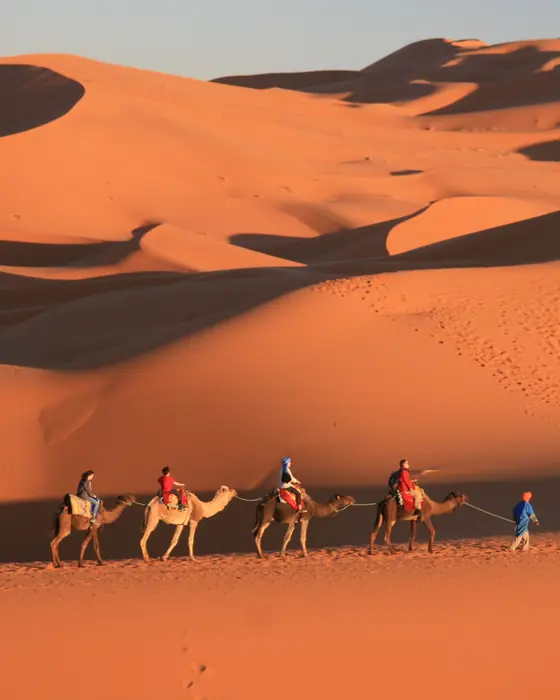 7 days · from MarrakechSahara Loop via MerzougaSee the route
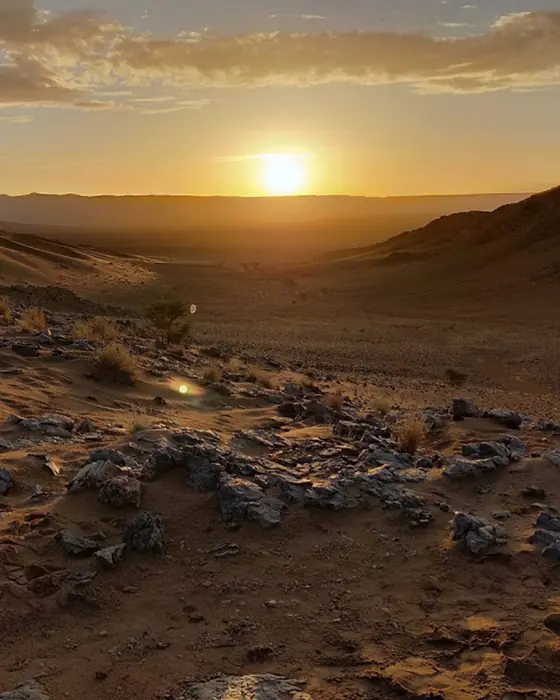 5 days · from MarrakechZagora Desert and the Draa ValleySee the route
Questions
What should I wear in Morocco?
Loose, light clothes that cover the shoulders and knees. They are cooler in the sun and respectful in the medinas and villages. Beachwear is fine at the beach and pools.
What should I pack for a night in the Sahara?
A warm jacket or fleece for the evening, a scarf, sunglasses, sunscreen, a torch, a power bank and a small overnight bag for the camel ride.
Is it cold at night in the Moroccan desert?
Yes, more than most people expect. Even in spring and autumn the nights are cool, and from December to February they get close to freezing.
Can I get Moroccan dirhams before I travel?
Usually not. The dirham is a closed currency, so plan to get it in Morocco from cash machines or exchange offices, including at the airport.